Details
Patinated bronze
H. 20 in.; W. 19 ¾ in.; D. 10 ¼ in. (base: 16 ½ x 8 ¾ in.; H. 2 in.)
Provenance
Private collection, England
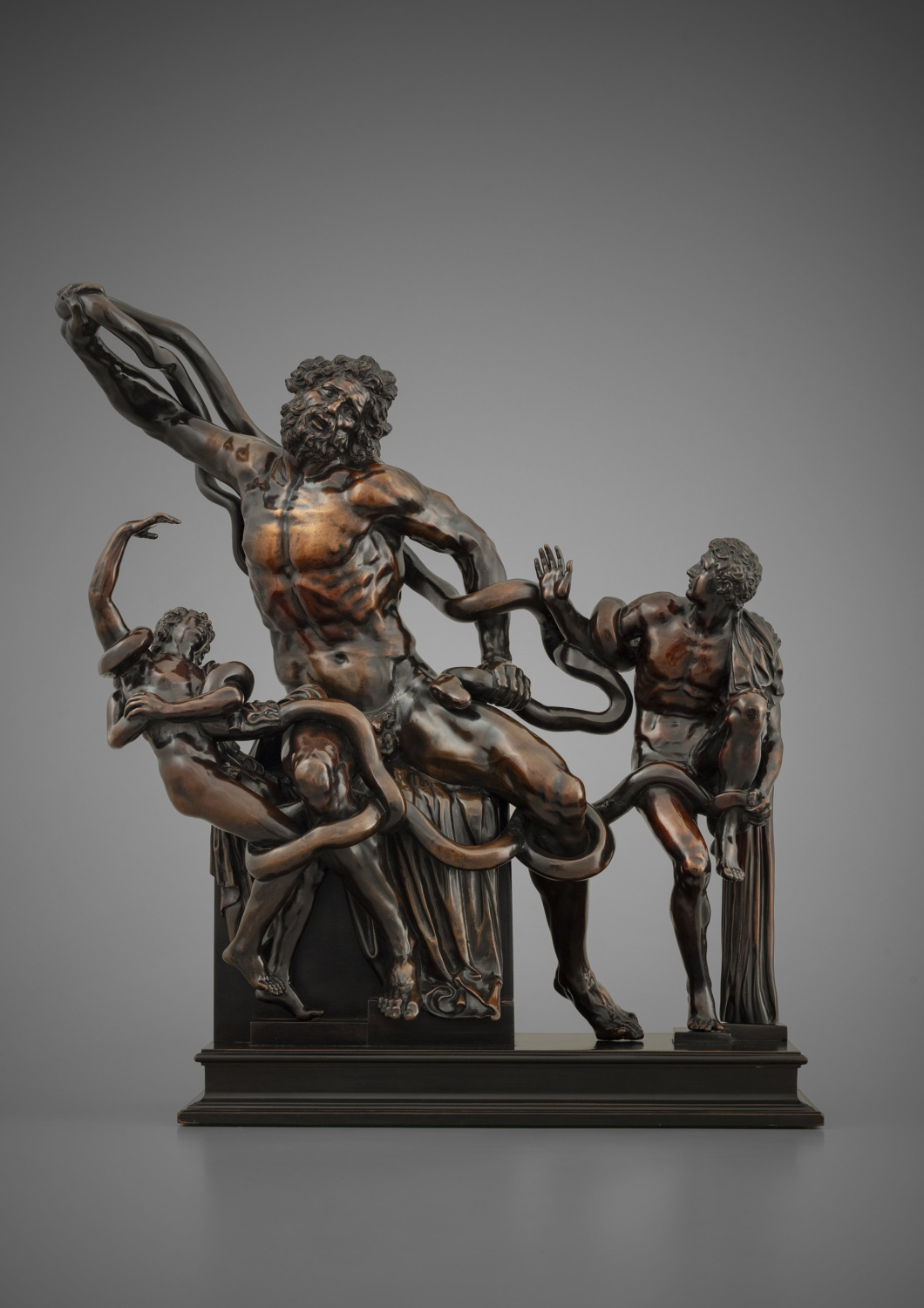
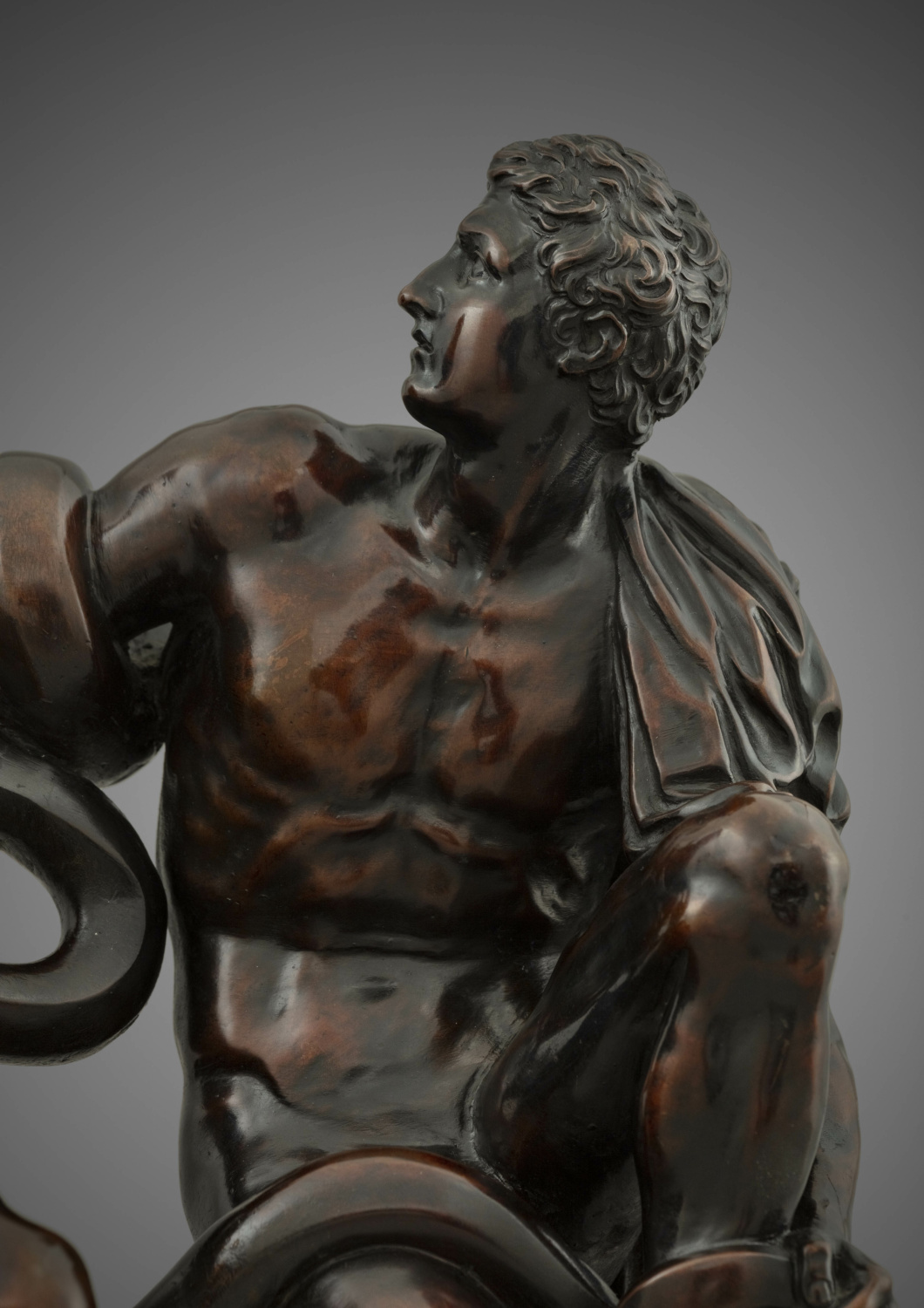
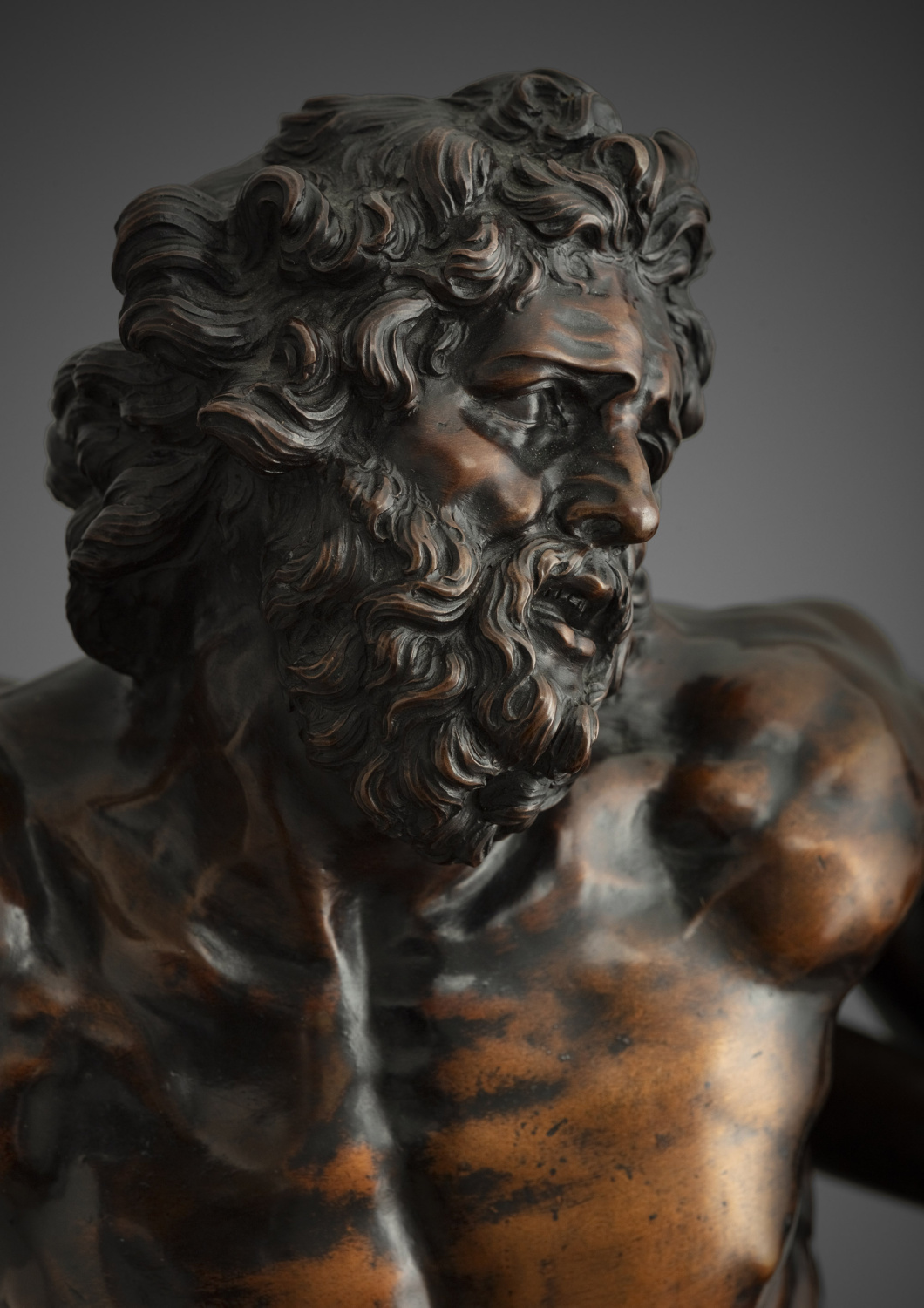
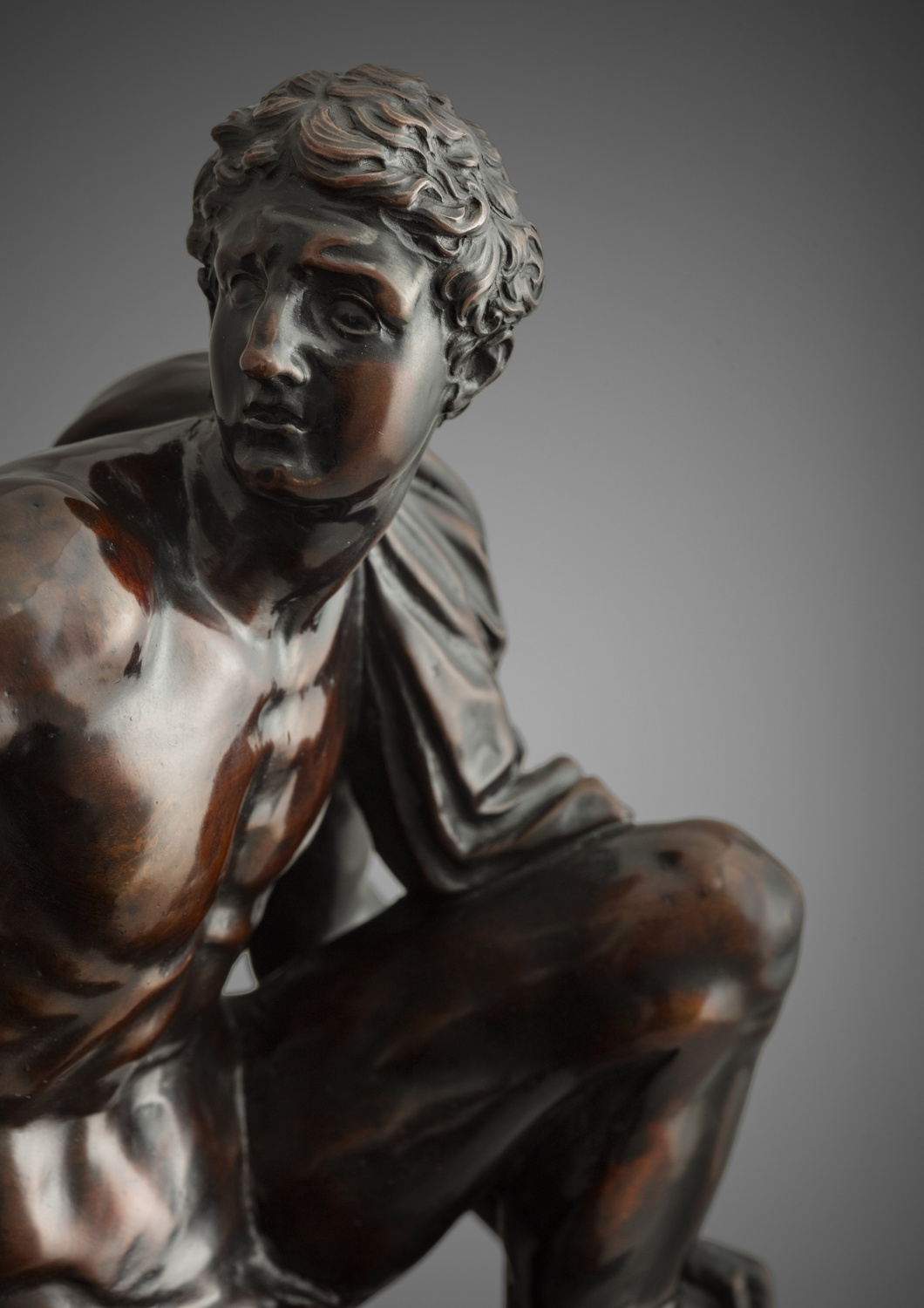
This patinated bronze reproduces one of the most celebrated antique groups rediscovered during the Renaissance: the Laocoön, unearthed in Rome in 1506 and immediately hailed as the masterpiece of the Rhodian sculptors Agesander, Athenodoros and Polydorus. The composition closely follows the Vatican original, while also reflecting the influence of Baccio Bandinelli’s version for the Uffizi, made in the 1520s. The Roman bronze-caster softened the scene, however: unlike the antique marble, the serpent held by Laocoön rests on his thigh without biting him, perhaps at the request of a patron wishing to temper its pathos. The subject depicts the tragic episode of the Trojan priest punished by the gods for trying to prevent the Trojan horse from entering the city. A bronze of fine quality, it reflects the fascination of 17th-century Roman collectors with the great antique models rediscovered during the Renaissance.