Tapestry “Les trompettes à pied”
Paris, early 17th century
Workshops of Marc Comans and François de La Planche
Cartoon by Henri Lerambert after Antoine Caron
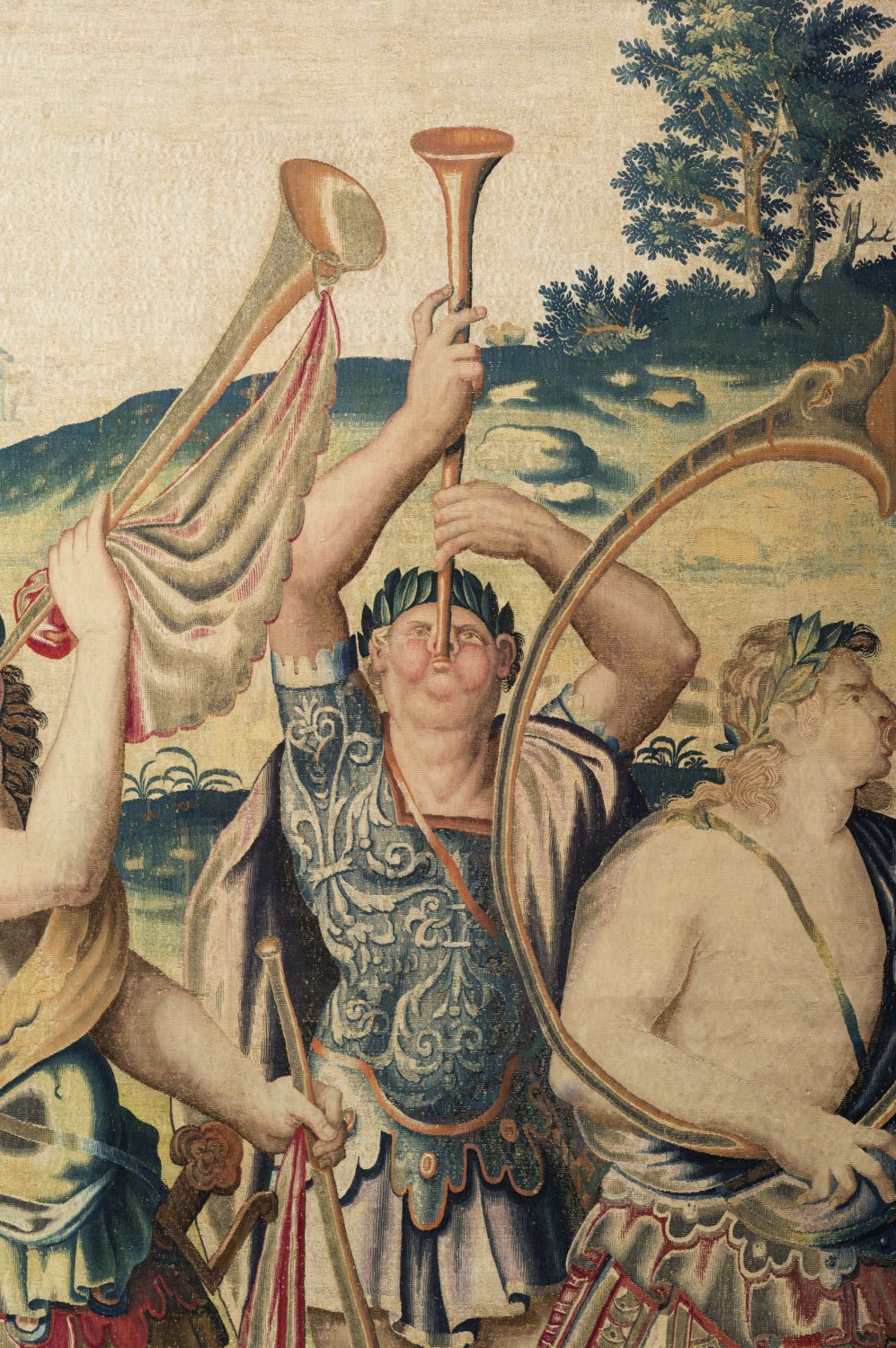
Details
Wool, silk, gold and silver thread
285 x 190 cm (112 ¼ x 74 ¾ in.)
Bibliography
‑M. Fenaille, État général des tapisseries de la Manufacture des Gobelins depuis son origine jusqu’à nos jours 1600‑1900. Les ateliers parisiens au dix‑septième siècle 1601‑1662, Paris, Imprimerie Nationale, 1923, p. 130
‑J. Vittet and A. Brejon, La Collection de tapisseries de Louis XIV, Dijon, Faton, 2010, cat. 233, p. 302
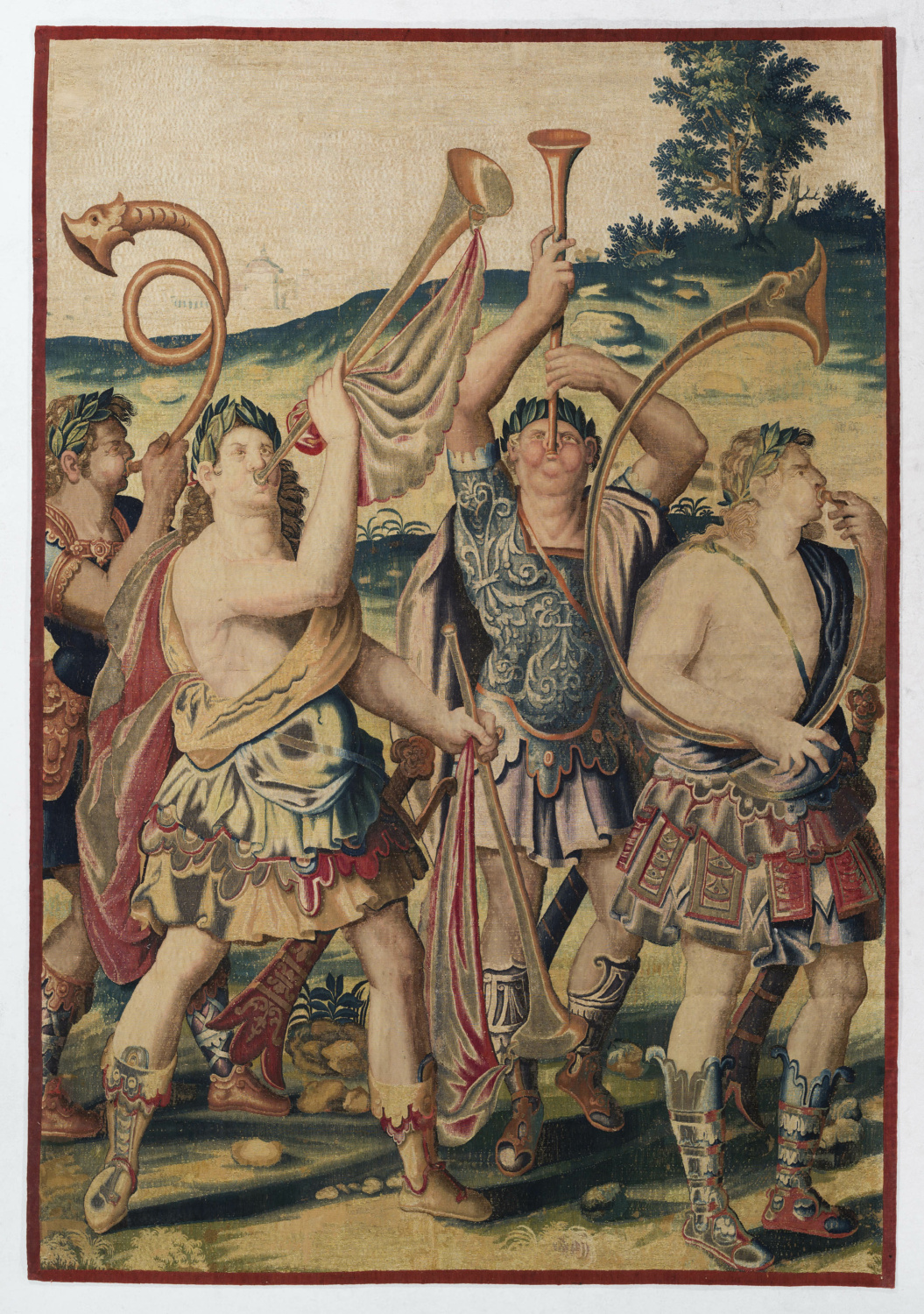
Tapestry “Les trompettes à pied”
Paris, early 17th century
Workshops of Marc Comans and François de La Planche
Cartoon by Henri Lerambert after Antoine Caron
This tapestry belongs to the Story of Artemisia series, which illustrates the lives of two queens of Caria. The series originates in a manuscript composed in 1562 recounting the history of Catherine de’ Medici, widow of King Henri II and regent of France, under the guise of Queen Artemisia. The text is by Nicolas Houel, with drawings by Antoine Caron (1521-1599) and probably other artists from Fontainebleau.
The transposition of the drawings into tapestry, however, came later. The first weavings of the series were produced in the workshop of La Planche and Comans in the Faubourg Saint-Marcel; the editio princeps bears the monograms of Henri IV and Marie de’ Medici. The cartoons are by the hand of Henri Lerambert (1550-1608). Trained by Primaticcio at the château de Fontainebleau, he became ordinary painter to the king and then painter of the king’s tapestries in 1601. He produced the cartoons for numerous tapestry series: The Life of Christ, The Story of Coriolanus, and The Story of Diana.
The present tapestry, entitled The Trumpeters on Foot, corresponds to the seventh sonnet of Houel’s work. The soldiers, crowned with laurel wreaths and blowing bucine horns, form part of the funeral procession of King Mausolus.